
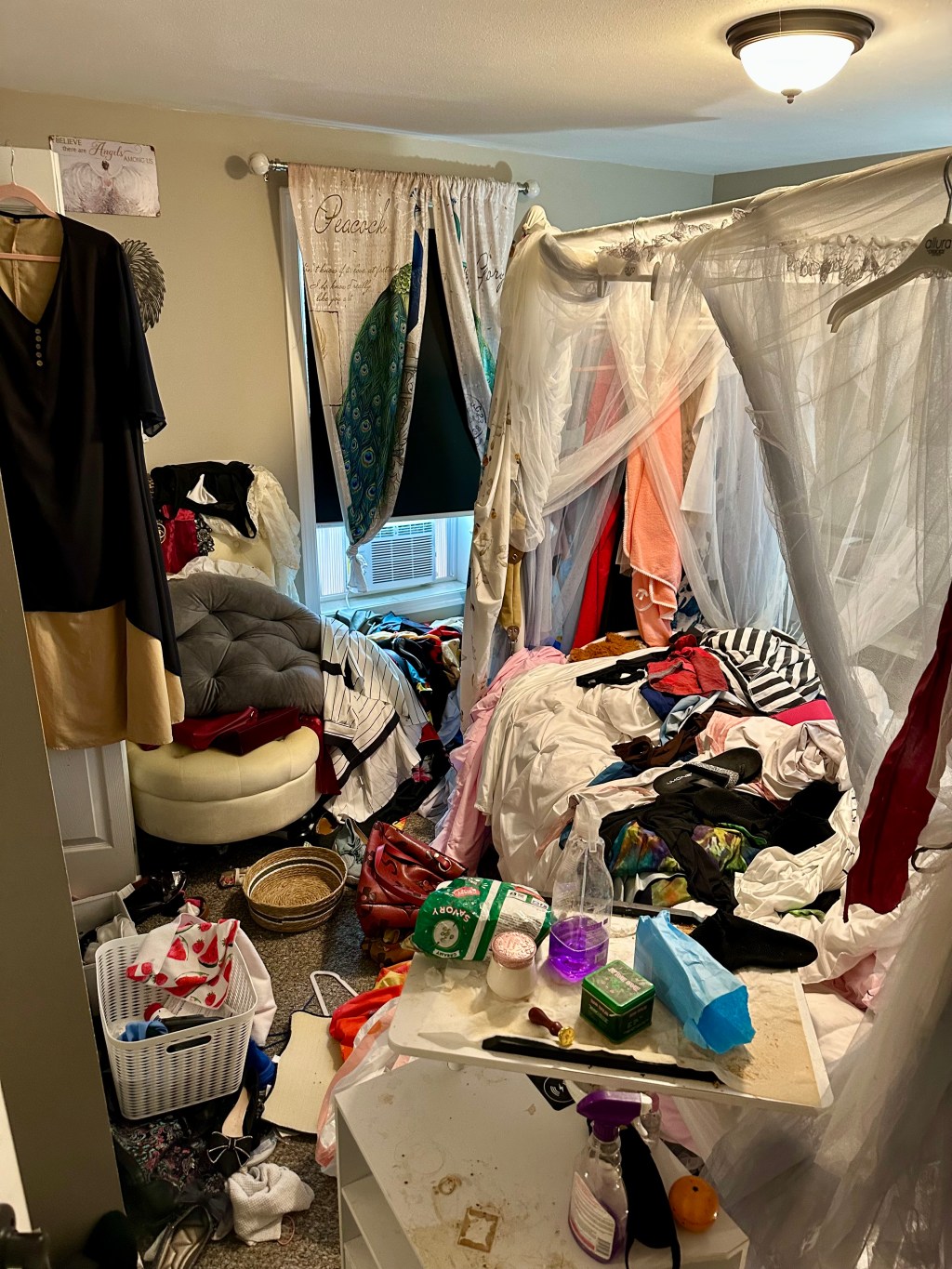
Inviting someone into your home to help you sort through your belongings is surprisingly personal.
You’re not simply showing them a closet that doesn’t work. You’re showing them what you’ve kept. What you’ve avoided. What you spent money on and regret. What belonged to your mother. The hobby you intended to pursue. The boxes you haven’t opened since the last move.
Sometimes you’re showing them parts of your life you haven’t quite figured out yourself.
Who you invite into that process matters.
Organizing begins with listening
It would be easier if every clutter problem had an organizational solution.
Sometimes it does. The pantry needs better zones. The entry needs a landing place. The closet has more clothing than space.
But sometimes the question isn’t where should this go?
It’s why is this still here?
That’s a different conversation.
My graduate work in change leadership taught me something I’ve found just as true inside a home as inside an organization: change rarely begins with the solution. It begins with understanding what is making the change difficult.
Before we can help someone decide what belongs in a space, we often need to understand what they want the space—and sometimes this season of their life—to become.
That requires listening before moving anything.
There shouldn’t be shame at the front door
People sometimes apologize when we first walk into their homes.
For the clutter. The garage. The room they haven’t been able to face. The fact that they “should have done this years ago.”
Sometimes there’s something else underneath the apology: apprehension about letting an outsider see the mess at all.
Will we judge them? Will we wonder how they let it get this way? Will we walk in and immediately start deciding what has to go?
I’ve had versions of that conversation with clients more than once.
“You don’t have to clean up before I come. And I’m not coming in to tell you to get rid of everything. I need to see how you actually live before I can help you figure out what isn’t working.” — Robin
Shame isn’t particularly useful when you’re trying to make decisions.
The house already tells us something happened here. People lived. Children grew up. Parents died. Careers changed. Things accumulated. Life got busy.
And a clean sweep isn’t necessarily the answer.
Sometimes a client wants substantially less. Sometimes they don’t. Sometimes the work is about letting go, and sometimes it’s about making better room for what they very much want to keep.
We’re not there to grade any of it.
We’re there to figure out what happens next.
Sometimes you need an outside eye
Living with a space makes it difficult to see it clearly.
You know why the chair is there. You remember when that cabinet moved into the hallway temporarily seven years ago. You’ve walked around the box beside the stairs so many times that you barely see it anymore.
An outside person doesn’t carry that history. That can be useful.
We can ask why. Why is this here? Why doesn’t this room work? Why are you storing this? Why do you feel like you have to keep it?
Not as an interrogation. As curiosity.
Sometimes the question is enough to let someone see something differently.
Trust changes the work
I’ve sometimes thought finding the right person to help you through a home can feel a little like finding the right counselor.
Not because organizing is therapy. It isn’t. But in my experience, there can be a kind of catharsis in working through the process.
You have to be able to tell someone the truth about what you’re struggling with before they can be particularly useful to you.
There is a point in many projects when the work stops being about stuff.
Someone finally opens the boxes. Tells us why the room has been untouched. Admits they’re overwhelmed. Changes their mind about what they thought they wanted. Or decides they’re ready to let something go.
Those moments can’t be rushed. And they certainly can’t be manufactured by a clever organizing system.
They happen when someone feels safe enough to be honest about what isn’t working.
That’s why the relationship matters.
The plan has to belong to you
I can see possibilities in a room. Eric can see how to execute them. We can move furniture, create systems, haul things away and help reshape how a home functions.
But we’re not the ones who have to live there afterward.
A beautifully organized system that doesn’t match the people using it won’t remain beautifully organized for long.
So the goal isn’t to impose our version of order. It’s to understand yours.
What do you reach for? Where do you naturally put things? What frustrates you? What are you willing to maintain? What would make living here easier?
Those answers matter more than whether your pantry looks good on Pinterest.
We don’t want to make your home ours
Minimalism has never been the goal. Neither has perfection.
A home should still look like someone lives there. It should contain evidence of interests, history, people and personality.
Editing simply gives those things enough room to be seen.
The right partnership shouldn’t leave you with someone else’s idea of a beautiful home.
It should help you recognize your own more clearly.
