
There is a particular organizing instruction that sounds perfectly reasonable: Put it away.
Except sometimes putting something away is exactly how it gets lost.
I learned this firsthand raising a creative, deeply spiritual and wildly messy neurodivergent son. There were many times I would ask if he had cleaned his room and receive a bold and confident, “Yes!” Then I would look.
His definition of clean and mom clean were worlds apart.
For a long time, I assumed we were looking at the same room and simply disagreeing about its condition. We weren’t.
When seeing something is part of remembering it
Traditional organizing often aims to get things out of sight. Clear the counters. Put everything in drawers. Close the cabinet doors.
Visually, it works beautifully. Functionally, it doesn’t work for everyone.
For some people with ADHD and other neurodivergent traits, visible belongings can serve as reminders. The library book by the door needs to go back. The medication on the counter needs to be taken. The paperwork on the desk still needs attention.
Put those things somewhere beautifully concealed and the room may look better. But the reminder may disappear with them.
That doesn’t mean everything should remain visible. That’s where things get interesting.
Visual cue or visual noise?
There is a difference between something being visible on purpose and everything being visible because it has nowhere to go. One provides information. The other can become so visually loud that nothing gets noticed at all.
The goal, then, isn’t necessarily to eliminate what’s visible. It’s to decide what deserves to be visible.
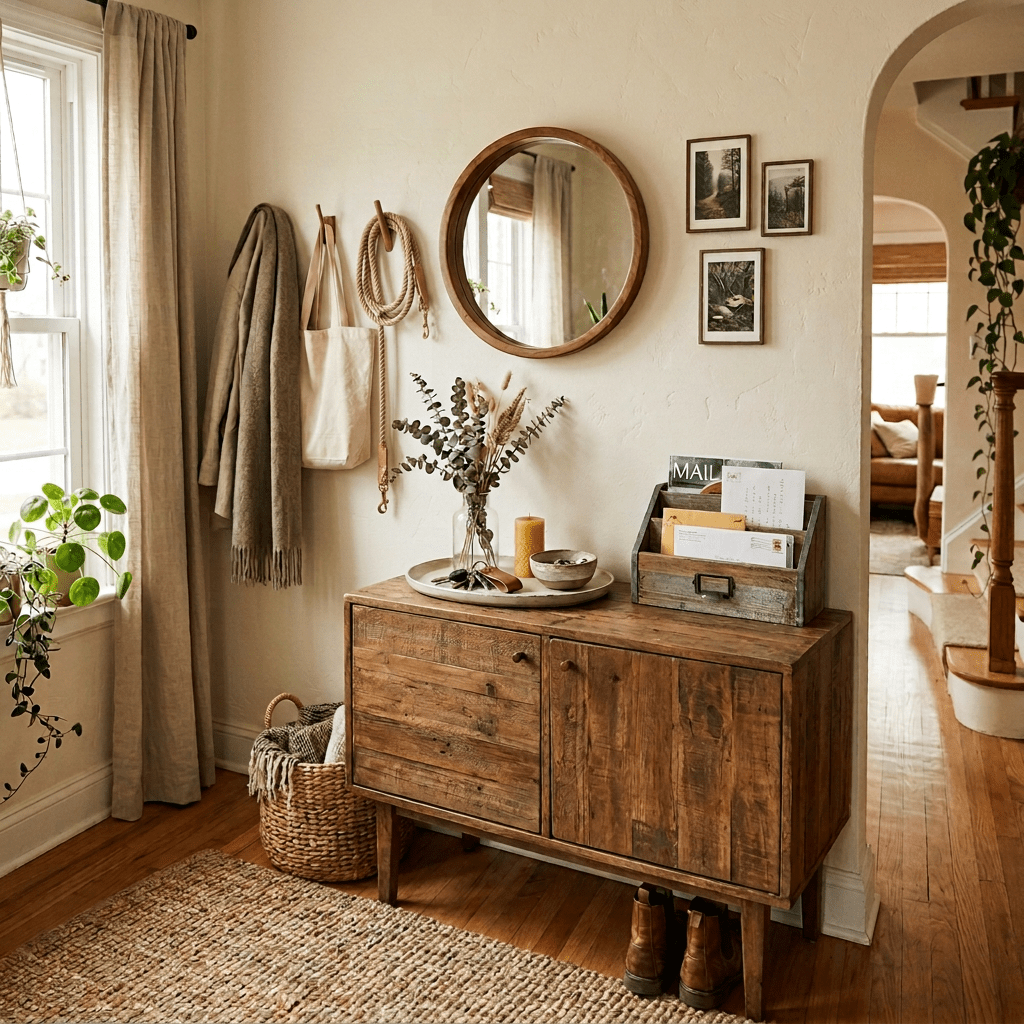
An entryway might have a bowl for keys, a place for a wallet and a charger. A desk might keep the current project in sight while everything unrelated gets put away. Daily-use items in a kitchen may deserve accessible storage while occasional items don’t.
I think of these as visual landing strips. Not clutter. Not display. A place where the things that need your attention are allowed to wait for you.
The system has to belong to the person using it
This may be the larger lesson my son taught me. I could create the most logical organizing system in the world, but if it only made sense to me, it wasn’t actually a good system for him.
That’s a difficult thing to recognize when you’re the person who loves order. It also changes the questions.
Instead of Where should this go? we can ask: Where would you look for this?
Instead of Why didn’t you put this away? maybe: What makes this difficult to put away?
And instead of designing a room around what organized is supposed to look like, we can design it around what helps the person living there function.
That may mean clear containers. Hooks instead of hangers. Open shelves instead of drawers. Broad categories instead of intricate ones. Or a few carefully chosen things left in plain sight.
There is still such a thing as too much
Accommodating the way someone thinks doesn’t mean abandoning order.
My son taught me that early, too. By fifth grade, he already understood something about himself that took this get ’er done diva mom a little longer to appreciate: he needed more boundaries, not fewer.
Left to his own devices, he knew he would procrastinate or struggle to complete self-paced tasks. He wasn’t asking us to remove the expectations. He was telling us he needed clearer edges to operate within them.
That was an essential lesson for me.
If every surface becomes a reminder, eventually none of them are. Visual cues still need boundaries. Landing places still need editing. And the things waiting there eventually have to move along.
The question isn’t whether a home looks perfectly put away. It’s whether the person living there can find things, remember what needs attention and restore some order without fighting the system every step of the way.
Maybe “clean” isn’t the most useful measure
My son’s room taught me something I didn’t understand at the time. I was measuring success by what I could see. He was experiencing the room from inside a brain that worked differently from mine.
Neither meant the room had to remain chaotic. But it did mean that imposing my system wasn’t necessarily going to teach him how to create his own.
That’s a distinction I carry into organizing now.
Sometimes our job isn’t to teach someone to maintain the system we would choose. It’s to help them discover the one they can actually live with.
